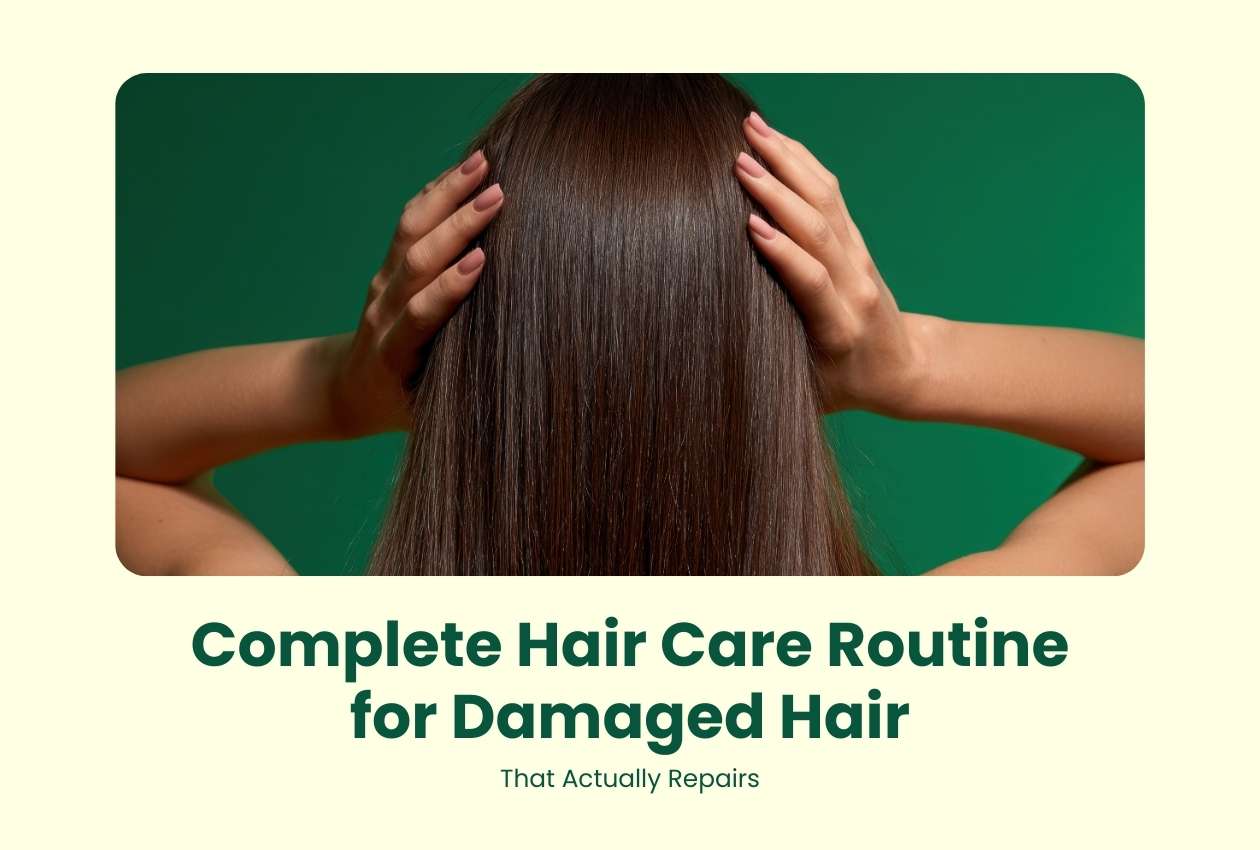
Complete Hair Care Routine for Damaged Hair That Actually Repairs

Key Takeaways
- Wash damaged hair only 2-3 times per week with sulfate-free formulas
- Always use heat protection before using styling tools
- Protein treatments help weak, stretchy hair; moisture treatments help dry, brittle hair
- Bond repair products work deep within hair fibers to restore internal strength
- Regular trims every 8-12 weeks prevent damage from traveling up the hair shaft
- Silk pillowcases and loose braids protect hair while you sleep
Heat styling, chemical treatments, and everyday brushing can leave your hair dry, brittle, and prone to breakage. Frustrating as damaged hair can be, the right routine and gentle care can help nourish and revive your strands over time.
Good news? Science backs up what actually works. A study published in PMC found that keratin application to chemically damaged hair resulted in significant increases in hair diameter, tensile strength, and surface smoothness. Another clinical study on hydrolyzed keratin peptides showed that protein treatments increased Young’s modulus and reduced hair breakage at both low and high humidity levels.
With that in mind, here’s a step-by-step hair care routine designed specifically for damaged hair.
What Causes Hair Damage?
Your hair’s protective outer layer, the cuticle, takes the biggest hit when damage occurs. Once lifted or broken, the inner protein structure becomes exposed and vulnerable to further harm.
Common culprits include excessive heat styling without protection, chemical treatments like coloring or bleaching, over-washing with harsh sulfate-based shampoos, and environmental factors like sun exposure and pollution. Physical stress from tight hairstyles or rough brushing doesn’t help either.
How to Spot Damaged Hair
Recognizing damage early helps you choose the right treatments. Watch for a dry, rough texture that wasn’t there before. Split ends and increased breakage are telltale signs, along with a lack of shine and overall dullness. Hair that tangles easily, feels weak or stretchy when wet, or refuses to hold any style often signals underlying damage.
The Complete Hair Care Routine for Damaged Hair
Building a repair-focused routine doesn’t require complicated steps, just the right sequence and products that actually deliver results.
Step 1: Pre-Wash Treatment
Before reaching for shampoo, apply a nourishing oil or hair mask to dry hair. Leave it on for 20-30 minutes to protect your strands during washing and deliver deep conditioning benefits. Coconut oil, argan oil, or specialized bond repair treatments work well here.
Step 2: Gentle Cleansing
Sulfate-free, moisturizing shampoos clean without stripping natural oils your hair desperately needs. Focus on your scalp rather than the length dirt and oil accumulate there, not on your ends. Washing only 2-3 times per week prevents over-drying, and lukewarm water protects the cuticle better than hot water ever could.
For hair that’s been through heat treatments, coloring, or rebonding, the Plix Hibiscus Bond Repair Advanced Shampoo contains FiberHance™, a specialized bonding agent that works deep within hair fibers to strengthen and improve internal structure. Plant keratin in the formula mimics natural hair proteins, while hibiscus extract acts as a natural conditioner to lock in moisture.
Step 3: Deep Conditioning
After shampooing, apply a protein-rich or moisture-based conditioner depending on what your hair needs most. Hair that feels weak and stretchy when wet craves protein, while dry and brittle strands need moisture. Leave the conditioner on for 3-5 minutes, focusing on mid-lengths to ends where damage concentrates.
Pairing your shampoo with the Bond Repair Advanced Conditioner helps reinforce the repair process. The ceramide complex coats each strand, reinforcing the protective outer layer and maintaining moisture balance. Hyaluronic acid in the formula attracts and locks in hydration where your hair needs it most.
Step 4: Detangling the Right Way
Gentle detangling while conditioner sits in your hair makes a real difference. Use a wide-tooth comb or your fingers, starting from the ends and working upward. Never brush wet hair; roughly wet strands stretch and break far more easily than dry ones.
Step 5: Leave-In Treatment
After rinsing, apply a lightweight leave-in conditioner or serum to damp hair. Look for ingredients like keratin, amino acids, or natural oils that help seal the cuticle and add ongoing protection throughout the day.
Step 6: Heat Protection
Planning to use heat tools? Always apply a heat protectant spray or cream first. Products that create a barrier against temperatures up to 230°C prevent additional cuticle damage. Whenever possible, air-dry your hair or use the lowest heat setting available.
Step 7: Overnight Care
Before bed, apply a small amount of hair oil to the ends and braid your hair loosely. Sleeping on a silk or satin pillowcase reduces friction and prevents the breakage that cotton pillowcases can cause.
Key Ingredients That Actually Work
When shopping for damaged hair products, prioritize formulas with repair-focused ingredients.
| Ingredient | What It Does |
| Keratin | Rebuilds the protein structure of hair from within |
| FiberHance™ | Creates new bonds deep within hair fibers for 3x strengthening |
| Ceramides | Coat hair to reinforce the protective outer layer and lock in moisture |
| Hibiscus Extract | Acts as a natural conditioner, trapping moisture and preventing dryness |
| Argan Oil | Provides moisture and helps smooth the cuticle for added shine |
| Biotin | Supports hair strength and promotes healthier growth |
Avoid products with sulfates (SLS, SLES), high alcohol content, or heavy silicones that build up over time.
How Long Does Hair Repair Take?
Hair repair is a gradual process, not an overnight fix. Texture and manageability improvements typically show within 2-4 weeks of following a consistent routine. Significant repair for severely damaged hair can take 2-3 months. Since hair grows about 1-1.5 cm per month, complete recovery involves both repairing existing damage and growing out healthier new hair.
Consistency matters more than quick fixes. Stick with your routine and trust the process.
Build Your Perfect Hair Repair Routine
Plix believes damaged hair deserves more than temporary fixes; real repair starts at the molecular level. The Hibiscus Bond Repair range combines plant-powered ingredients like FiberHance™, ceramides, and hibiscus extract to strengthen hair fibers from within. Every formula skips harsh sulfates and focuses on rebuilding broken bonds, locking in moisture, and protecting against future damage.
Ready to give your hair the care it deserves? Create a customized routine with products designed to repair, strengthen, and protect. Mix and match your favorites and save when you Build Your Own Box today.
FAQs
How often should I wash damaged hair?
Stick to 2-3 times per week; over-washing strips the natural oils your hair needs to repair itself.
Can damaged hair be fully repaired?
You can significantly improve how it looks and feels, but severely damaged sections need to grow out over time with regular trims.
Should I use protein or moisture treatments?
Weak, stretchy hair needs protein; dry, brittle hair needs moisture. Most damaged hair benefits from alternating between both.
Is air-drying better for damaged hair?
Yes, but gently squeeze out excess water with a microfiber towel first; leaving hair soaking wet too long can also cause damage.
What’s the best trim schedule for damaged ends?
Every 8-12 weeks, remove split ends before damage travels up the hair shaft, making your entire routine more effective.